I respectfully disagree with your take but I do agree about the humour, or lack of. I think you only have to go back and look at big budget ancient (ish) history films such as Gladiator or Troy to see how much better, weirder and strangely less commercial Nolan is as a Hollywood filmmaker, not that I think that it was perfect but I did enjoy it immensely.
5 Likes
Žižek about Nolan’s Odyssey in English below:
Summary
ODYSSEY: FINALLY A GOOD CHAMBER DRAMA
When, a couple of decades ago, Simon Rattle performed Arnold Schoenberg’s Gurrelieder in Berlin, he was asked how he could bring together Gurrelieder (whose performance demands a gigantic orchestra with an additional 400 chorus members) with Schoenberg’s well-known acerbic remark that in civilized Europe everything one needs to render the desired effect in a music performance is six, maximum seven players—we need orchestras only for the primitive Americans… Rattle provided a precise reply: Gurrelieder is simply a piece of chamber music that needs 600 players to be properly performed… I think this paradox renders perfectly the greatness of Christopher Nolan’s Odyssey.
My first reaction to Odyssey was a big surprise: after reading numerous reviews enthralled by gigantic spectacular scenes and the raw authenticity of fighting, the movie itself appeared to me almost the opposite of these descriptions—a rather modest, almost chamber drama which occasionally reminded me of B productions. We never see the beach in front of Troy with thousands of Greek soldiers and hundreds of boats in the water behind them; there is no mass battle with hundreds of soldiers fighting. The Greeks on the beach are mostly a small group of a couple dozen individuals lost in bad weather on the desolate beach sand. Troy itself is also not shown as a mega-city but more as a group of buildings with narrow, twisted streets between them. Plus, Nolan avoided directly showing excessive cruelty—just recall the passage of Odysseus’ ship between Scylla and Charybdis. Charybdis is not a gigantic whirlpool (easy to render with special effects) but a very modest circle of water posing no terrifying threat… These remarks are not meant as criticism: they point out what makes the film great.
Commentators noted long ago that, while the Iliad focuses on male exploits and struggles with women reduced to background tokens, the Odyssey also brings forward women’s inner lives. The Iliad begins with the rage of Achilles: he is furious because Agamemnon took the slave Briseis from him—however, Achilles is not hurt because of any emotional attachment to Briseis; what matters is simply that his pride was hurt. The Odyssey changes the perspective entirely, and Nolan takes an even more crucial and ingenious step further: the well-known beautiful stars who play women (Anne Hathaway, Charlize Theron…) are not made beautiful—the way they are shot, sometimes almost embarrassingly, displays their age fully. They are mostly desexualized (although Calypso kept Odysseus as her lover for years, there is no erotic tension in their relationship). This desexualization reaches its climax in the figure of Circe, superbly played by Samantha Morton. In the poem, Circe is a seductress: she turns men who reject her advances into pigs and keeps Odysseus as her lover for a year, while in the movie she is simply disgusted by male gluttony and turns them into pigs when they cannot stop eating. It is the highest male figure, Agamemnon, who is not really personalized: we mostly don’t see his face, which is hidden behind a gigantic helmet, and the same holds for the Trojan soldiers—they are anonymous and depersonalized, so that although the movie depicts Greek crimes and cheating, it does not do so by opposing them to more honest and sympathetic Trojans.
Nolan doesn’t just lament the decline of the heroic Bronze Age—he does so by exposing the dirty, ordinary reality of heroic acts ignored by poetic narratives. Exemplary here is the Trojan horse itself. (Since the starting point of Odyssey [the movie] is the Trojan horse, one cannot but notice the irony that the Trojan horse is not mentioned in the Iliad, the poem about the Trojan War, and is only briefly mentioned in the Odyssey; it is described in detail only in Virgil’s Aeneid, which recounts the fall of Troy.) Forget the hidden Greeks jumping out when the horse is pulled into Troy—Nolan shows, in disgusting, claustrophobic detail, the lives of these heroes as they waited for days inside the horse, pissing and shitting on each other, i.e., he "takes audiences inside the Trojan horse for an extended, gritty scene that lays out the cramped, horrifying conditions for those hiding inside, underscoring their maniacal, animalistic hunger to prevail in battle."1 Is this procedure not, from today’s standpoint, almost a case of Brechtian Verfremdung (estrangement)?
Odysseus mentions in the movie that they are at the end of the Bronze Age—an absurd self-designation that exposes the falseness of his historical awareness: Odysseus, by definition, could not know about the Bronze Age as a historical epoch because he was still part of it; he had no awareness of what the new world his crimes would ground would become. What one might call the original sin takes place at the very beginning of the film: we see Sinon, a young Greek soldier, guarding the wooden Trojan horse, half-buried in the beach sand. He is there to tell the Trojans that the Greeks have departed and that the horse is a gift of reconciliation, which the Trojans are expected to drag into the city. But Odysseus did not tell Sinon that elite Greek soldiers were hidden inside the horse: Odysseus knew the Trojan patrol would kill Sinon, and he wanted the Trojans to believe the explanation Sinon gave them (that it was simply a ritualized gift marking the end of the war). Why? Because Odysseus (correctly, in all probability) presumed that if Sinon himself did not believe the lie about the horse, he would not be able to convince the Trojans of it… Dante was right to place Odysseus in the eighth circle of hell in his Inferno.
Odysseus’ reflections that conclude the movie quite evidently point toward our contemporary predicament: just as Odysseus’ manipulations and lies announce the end of the Bronze Age heroic spirit of honor and the arrival of classical Greece, today the age of machines used by humanity to control nature and people is coming to an end. We are entering a new era characterized by two main features: the dominance of AI and the rise of “post-truth” culture. This is why, as in Odyssey, we hear all around us today the idea that we are approaching a civilizational erasure, and, as in Odyssey, we have no precise idea what will follow: a new, much higher civilization, or a new barbarism (or an unheard-of combination of both). One cannot but recall here Walter Benjamin’s famous aphorism: “There is no document of civilization which is not at the same time a document of barbarism.” Usually, ideology provides only the glorious beginning of a new civilization, ignoring the dark background—its founding barbarism. Nolan’s Odyssey does the opposite: it focuses on the founding crimes without any indication of the new civilization these crimes will ground.
I am tempted to read Odyssey the way Fredric Jameson proposed to read Antigone: for him, Antigone is not a play about the crisis of the Greek polis, about the disintegration of its organic unity, but, quite on the contrary, a play about the emergence of a state through the division between the private family sphere and the public sphere of the state—a state without this gap is not a state. So what if Odyssey is also not just the sad story of the disappearance of the Bronze Age heroic warriors and the rise of a new spirit of lying and cheating; it is at the same time the story of the rise of a new civilization (classical Greece), of the crime and cheating on which the model that grounded the entire Western tradition—its philosophy and art—was built. Odysseus’ nostalgia for the disappearing Bronze Age is thus false: once we are in the new order, there is no way back; every such attempt to restore old greatness ends up in new, brutal barbarism.
Here, even Adorno’s famous chapter on Odysseus in Dialectic of Enlightenment misses the point when it presents Odyssey as the ultimate allegory for Western civilization: Odysseus is a prototypical bourgeois subject who suppresses his own desires and exploits nature to survive. He cheats and lies to exert domination over others and nature, but the price he pays for his survival is that it becomes an end in itself, serving no higher spiritual purpose—what was supposed to be merely an instrument turns into its own end… I think Odysseus’ manipulations, his readiness to sacrifice individual lives to enable the survival of some larger whole, amount to more than just instrumental reason. It is a form of trickery that brings its own perverse satisfaction in the renunciations it imposes on others and on the hero himself.
At the movie’s end, Odysseus and Penelope install their son Telemachus as the new king and leave Ithaca for the West to meet all the soldiers for whose deaths Odysseus was responsible, and to make peace with them. My evil idea is that (in an added scene intersecting with the end credits) we see Odysseus and Penelope reaching America and contacting the natives, who promptly slaughter them because they quickly discern their destructiveness…
And, to conclude on a more hopeful note, perhaps it is a sign of persisting civilization that, despite a gigantic negative campaign, a difficult, dark movie like Odyssey is still a big success, beating stupid blockbusters like Moana and Minions & Monsters.
1 Like
it’s interesting you mention the incel side of it.
i saw it on saturday night with my partner and she said it brought up the gisele pelicot crime and stuff like that. – the scene where nikki’s real half can talk while the other is sleeping etc. and there being other similar things happening with the cat etc.
i was pretty grossed out by the film. it’s well put together even if it’s a bit quick and the directors trying to fit in quite a lot/explore quite a lot in a pretty short film. but as a b movie kinda flick i think it’s alright to let lots slide.
I study incels in my line of work, so maybe there was something turning me off because of my experiences. The main guy has a lot of toxic masculinity that people don’t often think about within the manosphere stuff. She only fits into his idea as a girlfriend when she literally forces herself onto him and pushes past his boundaries. I definitely see the Gisèle Pelicot angle and was so disturbed when they first show the sex, even though it’s shot in an exciting montage kind of way. And you’re right about the movie trying to do a lot in a short time on a smaller budget—I need to give it more grace.
3 Likes
Agree with you totally.. Also to add to the criticism, the first hour of the film felt like trailer of the film itslef..
We saw Odyssey on Sunday and absolutely loved it. Won’t do a deep dive but we left the cinema saying “wow”
5 Likes
Just watched ‘On The Sea’.
A quiet, character-driven film about a fisherman grappling with his sexuality.
Incredibly strong performances from Barry Ward, Lorne MacFadyen, and Liz White. A beautiful and sensitive tale. Really quite moving. Great cinematography too.
4 Likes
Signed up for a Cineworld membership yday, initially to go see the odyessey on IMAX, but couldn’t get decent seats, opted for toy story 5, which was brilliant, I don’t. Know how they manage to nail it every time with those films. After a bit of a heavy weekend I was bawling at several points 
Going to see odyssey on Monday on imax, the end of oak street in 4dx on the 15 (no idea what that’ll be like) and trainspotting 30th anniversary 4k release end of month. Nothing like getting Ur monies worth
5 Likes
We’ve got Odeon subscriptions and use it quite a bit, pretty much go and see anything  We love it and you end up watching films you may not necessarily pay good money for ordinarily but end up being ace
1 Like
I saw it last night, and this is close to my take on it
I have been avoiding this thread for two weeks as I knew it had Odyssey chat in it. I avoided most of the trailers too and wanted to go in as dry as possible. The first 40 minutes is really not great, lots of people saying it feels like an extended trailer
While I didn’t dislike it, I am not sure I loved it.
Samantha Morton steals the show for me, and that sequence is the by far the stand out. It feels like a different movie altogether, and its where the film finally finds its groove.
The obvious decision for the dialogue to be spoken in contemporary American accents by the entire cast is really, really distracting.
The score is excellent though, and does a wonderful job in ramping up the tension in various sequences but it just didn’t quite have the hold your breath moments like the openings to Dark Knight or Dunkirk, the Joker chase and truck flip in Dark Knight, the spinning space dock in Interstellar and to a lesser degree the atomic bomb test in Oppenheimer. These are the kind of wow moments you expect in a Nolan film, and while the mostly practical effects are to be applauded during the mythic and monsters bits, they didn’t feel truly epic to me.
Need to digest it more, but its definitely essential viewing. I saw it on a floor to cieliing IMAX screen which is the best way to experience it if you can.
4 Likes
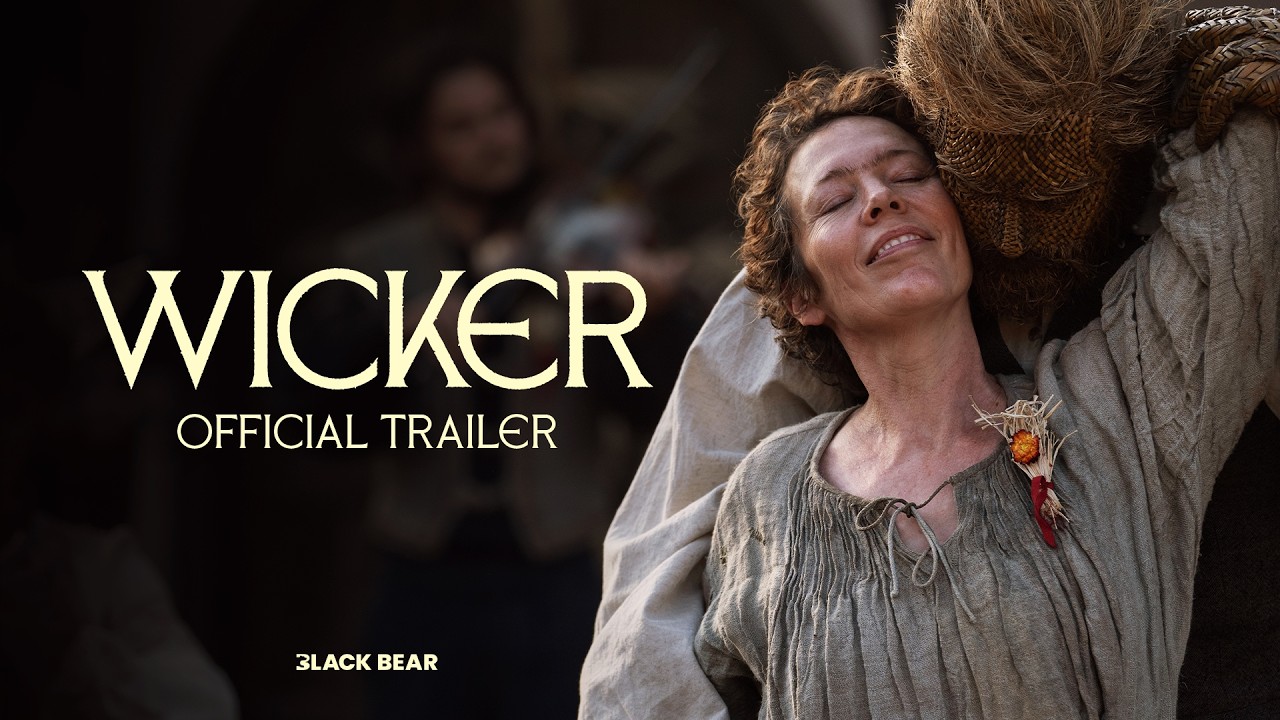
New Olivia Coleman klaxon; ‘Wicker’ - drops October…
8 Likes
i know i could look this up on the internet, but do you think it’s appropriate for an 11yo? my kid loves mythology and knows the story (mostly from “epic” the musical) but i’m imagining that this is a very different retelling, and all i really care about is violence/gore/cruelty.
my kid is a very mature kid, can handle adult situations and isn’t put off by overly complicated stories or situations, but i don’t need any “dark knight” type violence in their life right now.
I think if you’ve any reservations about violence, I would avoid taking him to this. There’s a lot of swords and blood. In fact blood features quite prominently throughout. The Trojan Horse sequence is particularly gnarly. Its way more graphic than the Dark Knight
1 Like
thanks - i should also say that i myself generally avoid cinematic violence. not a fan. it has this adverse effect on my ability to enjoy a story, i feel manipulated in a way i don’t like. i know that’s often the point, but it feels weird to me to be pushed in those directions, and always has.
i am looking forward to this, the cinematography looks beautiful. and laurie metcalf is terrific in everything she’s in.

15 Likes
Last night my lil kiddo watched some new version of Karate Kid, daaaaamn it was too mutch. Ok, it’s about martial arts but old version was ok for kids, this one has unnecessary discusting scenes.
1 Like
I get that take. Movies are manipulative in a lot of ways; music, angles, lighting; it depends on the film but sometimes if I feel like any of those (including violence) are being used to over-handedly affect the audience I get turned off.
You should watch Jeanne Dielman, 23 quai du Commerce, 1080 Bruxelles if you have the patience. The payoff is outstanding.
3 Likes
I heard Greta Gerwig talking about it on Adam Buxton’s podcast a few years back and had to seek it out. I thought I’d probably have to watch it in several sittings, but became completely transfixed from the beginning.
The way the daily minutiae become the narrative and the impact the tiny disruptions start to have as things slowly unravel. Lots of themes being explored too. I won’t mention them here for fear of spoiling it for others.
Great film.
1 Like
I didn’t enjoy this film at all, agree on the sterility. LOT of anguished characters talking emotively at each other for the first hour, before any sort of journey/action takes place. I can’t really stand films where the dialogue is just anguish on top of anguish, reminded me of trying to watch Romeo & Juliet. I get that people’s actions in this time were largely driven by their interpretation of the gods, but I feel like this aspect should have been explored more, needed some context around how the protagonists formulate their approaches to decision making. I never felt their ‘fear’ of offending the gods, just people casually sacrificing children and friends. Perhaps my fault for not being a deeper scholar of the Greeks.
Never studied or read Homer TBH. Saw some comments from mediterranean types that the film was quite emotional for them given how it loomed quite large in their childhoods.
1 Like