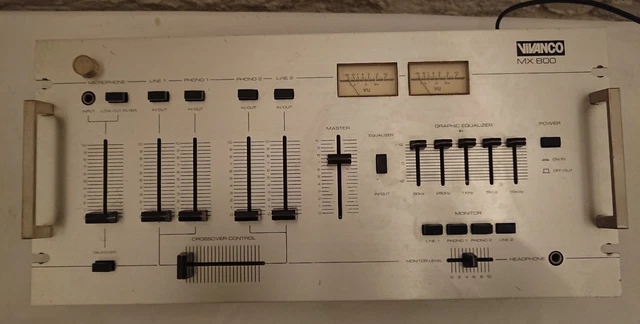
I’ve always had a soft spot for '70s analog mixers with sliders.
Nothing fancy for today standards, but there is something about faders with the right amount of resistance—the physical connection, the control, the feeling that I find hard to replace.
Specially if there’s no EQ available.
Of course, everyone has their own idea of the perfect mixer.
For me, a beautifully crafted mixer is not automatically the right one.
So let’s talk about mixers in general.
The classics, the overlooked gems, the forgotten corners, the modern boutique builders, the weird ones, the ones that simply feel right… and maybe the ones that don’t.
I agree about the faders 100%. I have been playing out on mainly rotary mixers for the last maybe 5 or so years. Although they do have their obvious merits, I have come to the conclusion that in general I don’t enjoy the interface as much as I do with a mixer with faders.
I have done a couple of side by side comparisons at home with various models, and at least on my system the difference in sound quality is very neglegable with any high end mixer.
I haven’t had the pleasure of using any vintage models, but would absolutely love some heritage fader action.
I wasn’t around in the '70s, so my perspective comes from discovery rather than real experience. I’m sure many people who actually used these mixers at the time have interesting opinions about
The faders had a kind of beautiful resistance — they felt like instruments. Later, most fader-based mixers became much lighter and easier to move, possibly to make them more universal and to better suit performance-oriented techniques like scratching.
The nice news is that many of these lovely grandfather mixers are inexpensive and kind of overlooked.
Early Japanese-made Vivancos (my favourites) are quite easy to find on the German second-hand market or eBay. Check out models like the MX800, MX750
There were also other regional European brands that either rebadged Japanese analog mixers or had them built to their own specifications as far i am concerned
I’m trying to find more brands and models like this from around the world.
I owned a couple of these. Got them cheap with some issues, bought online and had them fixed up. Never really wanted to shell out thousands for a rotary mixer, well I did want to but, couldn’t justify. I used one in a bar one night, was really, really nice to mix slow to mid-tempo edits on, relaxed kind of bar, not a party going on. Anyway got one set up in my place, but just never used it. I mean how often do you have the time or inclination to spend 3-4 hours mixing slow edits at home? I would have liked one in a radio studio, but it’s always a generic mixer in there.
The pots pick up dust really easy, they are a bit sensitive really. Not the most user friendly machine I’ve ever owned. But if you keep them in good nick, it’s a really nice experience for 4/4. I never really threw a party on one but the kill switches would make it possible.
*Edit - I just looked up those Vivancos, they look cool, and cheap! Do you have one, do the faders hold up?
The second mixer I bought (after a Soundlab mixer & turntables set) was a Vestax PMC-005 along with a pair of 1210’s. A chunky little 2 channel number with raised VU meter, in a snazzy silvery/gold colour. Loved it.
Had a Korg 4 channel mixer that was an early analogue/digital experiment that didn’t sell and was discontinued soon after. All channels could be switched between phono, line and digital. This was ideal for me as I was dj’ing with vinyl and Ableton Live using the tempo and nudge up/down as pitch control.
Yeah, I have an MX800 - I’ve had it for about four years now, and it’s built like a tank really. The faders feel great, with just the right amount of resistance. Those amber-lit VU meters at night are an absolute delight.
They’re also designed with some sort of a dust shield around the slider slot, which helps keep dust from getting inside.
I remember seeing a Tonka Soundsystem video where they were using a mixer that looked very similar to the MX 800. I’ve been curious ever since about what model it might have been?
I’ve owned a few Japanese-made Vivancos from that era over the years, including the 750, really nice, and I also really like the MX760. Really compact, a bit more delicate in its construction.
I first came across early Vivancos well over ten years ago in a record shop in Cologne. The owner was using an MX700, and that’s another model that’s well worth checking out.
Horizontal knob layout instead of the vertical one, nice. I love it. A friend of mine has that model too. Great fun to play and the knobs have a really nice resistance to them as well
I think, like any musical instrument, that the best mixer you can have is the one that is readily and easily available to operate. There’s nothing like a piece of equipment you can just go up to and turn on and use.
Like many things sorta ruined by rich people, it’s harder and harder to know whether something is really good, or just expensive for the sake of showing up on the right instagram accounts.
After I bought my Ecler WARM 2 I never thought about mixers again. It does everything I need, I don’t mind the rotary because for the type of music I play it’s fine, and it sounds pretty good. For the price, it’s hard to make it better. I wish I used it more.
i had one of these for years and thought it was super fun as a sort of combination dj and production mixer. decks on channels 1 & 2 for blends, a deck on 3 for second-fader pop-ins or scratching, and line on channel 4 for portable samplers. weird lil’ mini-fader for the mic pan. sounded pretty good, and was built like a tank.
would i want to use one now? no, not really, the EQ was kind of useless and the cue “fader” was a little weird. could have stood for a few more pots and a few less faders. but still - a fun lil’ oddball.
Yep, took around an hour for my brain to adjust the first time I used one, and then I was like, “cool, big pots are awesome, this layout is awesome, I get it.”
I ended up selling the ones I owned for around a grand each, was happy to take a small profit and move on. I see they are going for around 3K on ebay now, but that’s mint ones from Japan that have been serviced I imagine. Mine were beat up and had been repaired multiple times. I did have trouble with scratchy pots and faders, never really knew if it was dust, or corrosion (I was living near the beach at the time), or just the age of the unit that kept causing me problems. Was happy to pass to the next owner after a while Anyway, if anyone ever grabs one of these get your dust jacket sorted, get the dehumidifier running and be prepared to open it up and get in there with your contact cleaner periodically.
(really liking the look and price of the MX800, will probably hit the buy button soon enough)
This wonky listing from Lithuania made me briefly imagine a whole parallel universe of DJ mixers with huge rotary controls, multiple green LED displays and lots of sturdy buttons
i wanted a rodec mixer for a while as i saw jamie tiller using one and in the background of his pics for nts etc. they’re pretty rare and spenny in the uk as i guess they’re more of a euro mixer.
i was in brussels for a weekend and was talking to some guy in a record shop as they had one, and he was saying something like ‘the rodec is fine, but i really want a xone92, they’re quite hard to get here…’ and i kinda like that each of us wanted what was readily available elsewhere. – always the way. i’ve stuck with my xone92, for now.
My mixer journey went from
Kam Made2Fade GM30TX > Made2Fade seemed to be the right of passage for budding DJs in the mid 90s
Then onto a Numark DM1002X which I absolutely loved and quite literly wore out.
I then went to a Pioneer DJM600 which felt like a big step up, had all the effects but couldn’t help shake the feeling that Numark sounded better.
I then ended up in China for a year in 2001 > and started getting stuck into the Deep House Pages…and very soon, the virtues of rotary mixers - Bozaks and Urei’s - became apparent. and were obviously the weapon of choice of my heroes, from Levan to Tenaglia (and all the 90s US DJs in between)
So queue 2004 and my 30th, I found myself in NYC for the last Body & Soul @ Vinyl and decided to treat myself to a vintage Urei 1620, bought by this guy called Mario who seemed to source and restore a lot of old rotary mixers. Was quite odd rocking up to a DIY store near times square and handing over a big wodge of cash. But all turned out well. I think part of the mystique was that you just couldn’t get them in the UK.
I became absolutely hooked and could never go back to using faders / cross faders. It just made the connection feel much more tactile and intuitive.
Used that trusty Urei for a good 15 years until finally wanting a bit more functionality and getting a Mastersounds radius 4v mixer. I thought I’d go back to using the cross fader but realised I’m rotary through and through. And the Mastersounds ticks all my boxes.
My current mixer is an Ecler Nuo 5 and I really love it. It’s not far off 20 years old and the only work I’ve had to do on it is replace the power supply. It is definitely due a service soon. My only real gripe is the effects are not good, so I never use them. I did recently take possession of a Pioneer EFX 1000 but I haven’t played about with it yet.
My only experience of a rotary was a vintage Urei. I was quite nervous about using it because it was for a club gig and I knew the party was sold out so it all felt a bit more high stakes than just using one at a bar and getting to know it as the night progressed which I’d have been fine with.
The promoter invited me to come down to the venue on the night before the gig for a practice and to show me the basics. There was someone else coming down who wanted a practice shot before playing a gig on it later that night. I got there and the ‘someone else’ was Floating Points and I had to stand there with him in an unopened empty nightclub trying to pull off mixes on this alien mixer and making a complete dog’ arse of it. He must have thought I was a total amateur!
That’s a pretty good idea, perfect for VJs making the transition to DJs…but that’s not the 800 that’s for sure anyway as you see, they had run into the world of vintage video mixers, which is also interesting
The mixer I’ve always wanted is this Formula Sound workhorse which was literally in every UK club in the 80s. Brilliant sound and almost completely indestructible, the modular design meant that if the 15th pint spilt into it did cause a problem you could just pop out the channel strip and replace it.
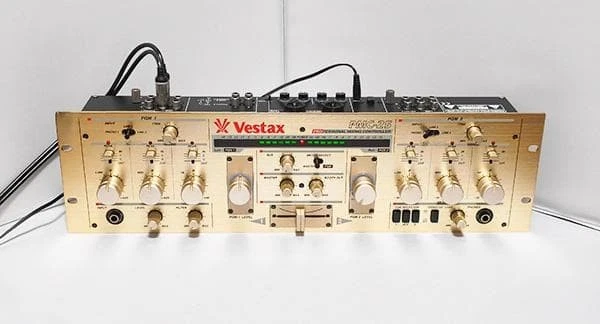
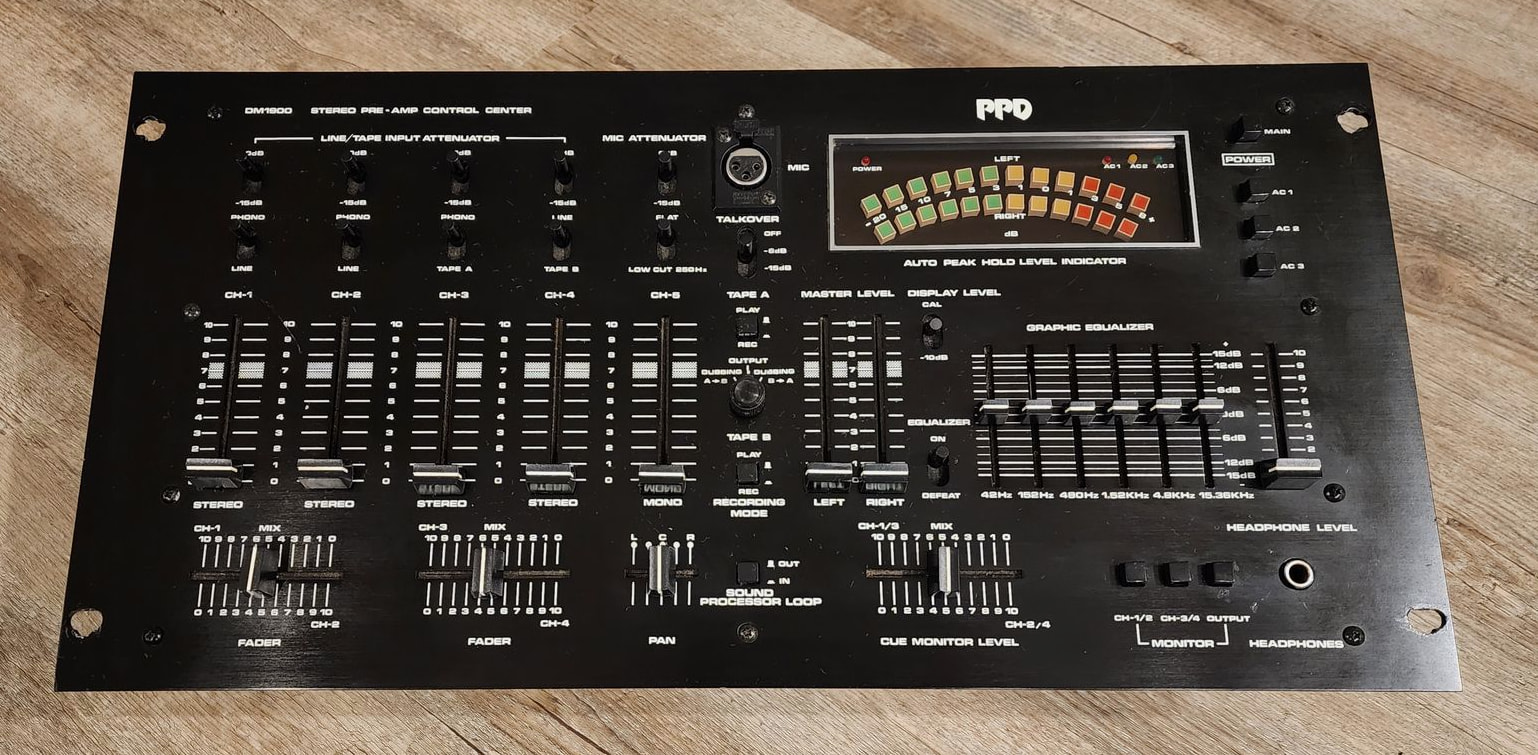

 Anyway, if anyone ever grabs one of these get your dust jacket sorted, get the dehumidifier running and be prepared to open it up and get in there with your contact cleaner periodically.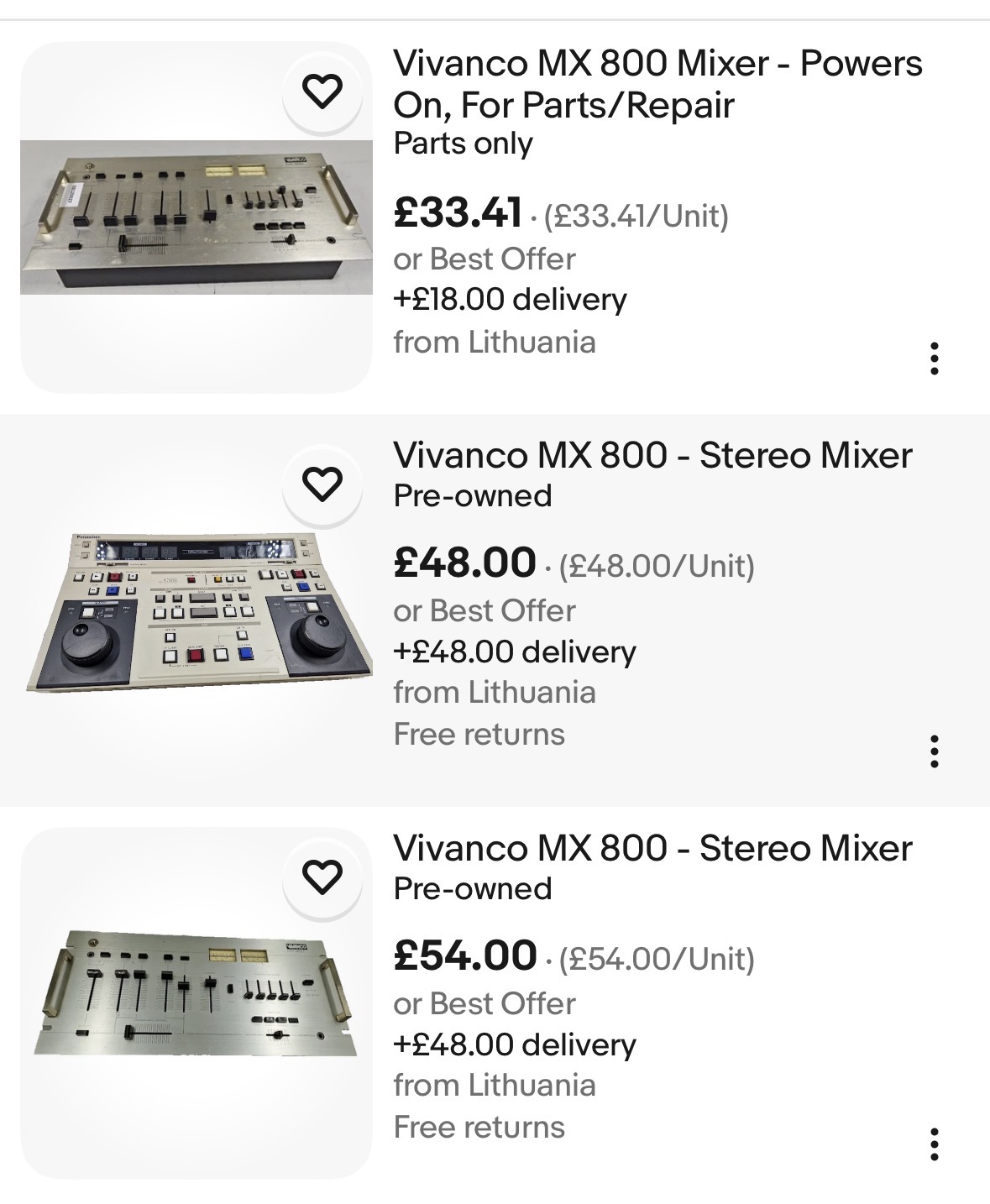
 anyway as you see, they had run into the world of vintage video mixers, which is also interesting